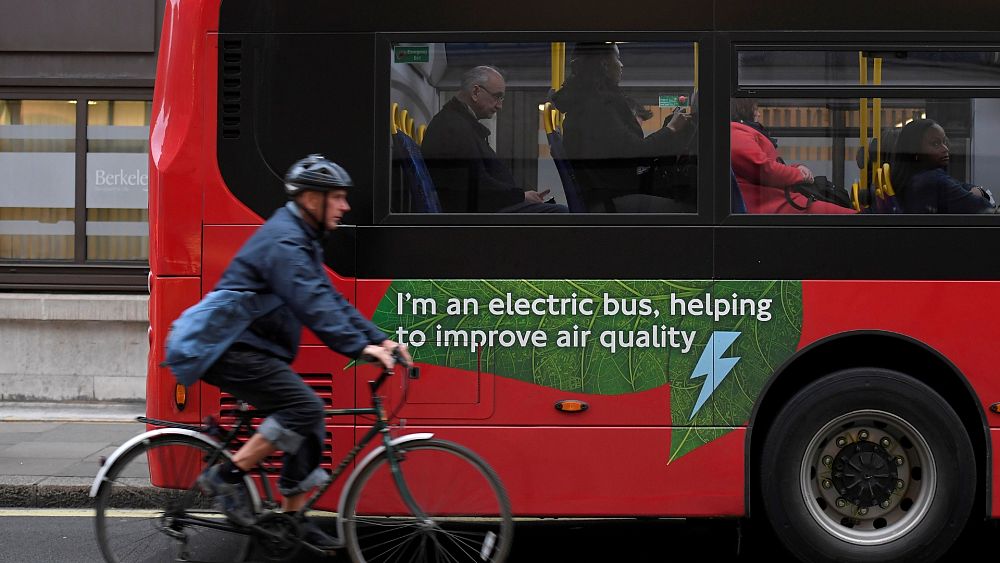
Which European towns are looking at zero-emission public transportation?
Salikmotor, America – Which European towns are looking at zero-emission public transportation?
A new study has shown which European cities have the best and worst environmentally friendly transportation links.
The Clear Cities Campaign (CCC), a coalition of over 80 organizations advocating for zero-emission mobility, ranked a total of 42 cities. The study, which was released on Monday (3 July), aims to track decarbonisation in these urban areas.
The emphasis was on shared transportation and zero-emission travel options, and the results were unexpected.
How were the locations examined?
CCC’s community, in collaboration with sustainability consultant Ricardo Vitality & Surroundings, began gathering information on all of the highlighted areas in the first quarter of 2023.
Each area was then graded out of ten on a range of parameters, including the availability of shared electric cars, bikes, and e-scooters, the number of zero-emission buses in operation, and the amount of electricity cost considerations.
The cities themselves were chosen because they are involved in the city mobility issue and provide a wealth of data.
Lille, with a population of 195,278 people, was the smallest to be included, while Better London, with a population of 8,799,730 people, was the largest.
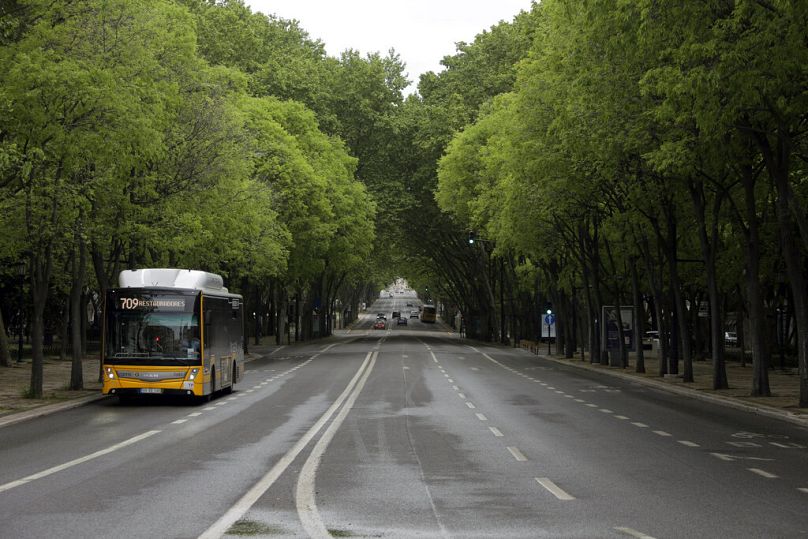
Which European towns are looking at zero-emission public transportation?
It will come as no surprise to many that cities in Denmark, Norway, and Sweden were in the top 10 for environmentally friendly public transportation.
In actuality, Copenhagen is at the top of the list, followed by Oslo, Paris, Amsterdam, Hamburg, and Helsinki. Milan is ranked seventh, with Lyon, Ljubljana, and Lisbon rounding out the top five.
Read also: Why an “all-solid battery” can save a lot time for EV house owners
Paris, Helsinki, Lisbon, and Brussels all received tens for shared bikes and e-scooters, while Copenhagen, Amsterdam, and Ljubljana received the same for electric vehicle sharing.
No city received full ratings for zero-emission buses.
Edinburgh, Birmingham, Granada, Dublin, and Better Manchester are the five poorest total scorers.
What did the report find out regarding zero-emission transportation?
What’s surprising is that, when compared to the CCC’s overall city mobility rating assessment, cities like Milan, Ljubljana, Budapest, and Sofia do better right here. It demonstrates that making inroads towards shared and zero-emission transportation is not primarily limited by financing.
The research emphasizes the importance of local administration in the transition to zero-emission public transportation.
“Metropolis leaders who demonstrate management and ambition are in a position to make clever and nimble funding decisions that may supercharge their efforts toward a zero-emissions city future,” says Barbara Stoll, head of the Clear Cities Marketing campaign.
“It’s not just about having more money – cities that aren’t among the wealthiest have outperformed their peers thanks to good regulatory frameworks and forward-thinking planning.”
The current celebrities – Oslo, Copenhagen, and Amsterdam – are on track to have totally emission-free public transportation by 2030.
